 Skip to content
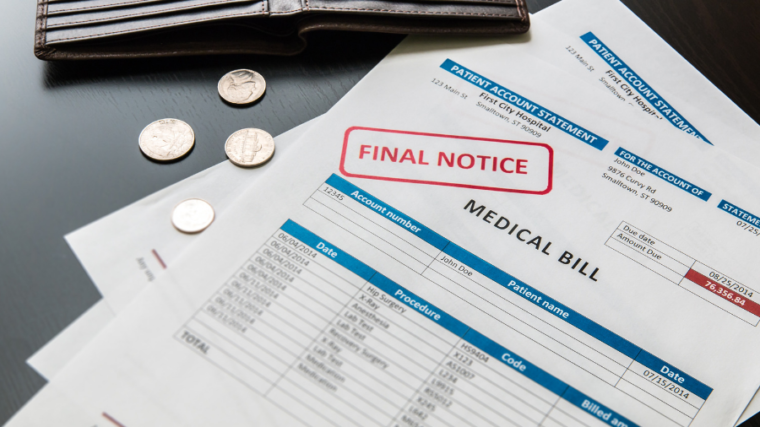
A single hospital stay can generate bills that rival the price of a new car. An emergency room visit, a night of observation, or a routine surgery can produce charges of tens of thousands of dollars — and for uninsured or underinsured patients, those numbers can feel like a financial death sentence. Here is what most patients never learn: hospital bills are not fixed prices. They are opening offers. Hospitals routinely reduce, discount, restructure, and even forgive medical bills for patients who know how to ask. This guide walks you through the entire process, from reading your first statement to negotiating a final settlement.
Why Hospital Bills Are Negotiable
Hospital pricing is unlike almost any other industry. The “chargemaster” — the hospital’s master price list — contains inflated list prices that almost nobody actually pays. Insurance companies negotiate rates that are often 40–70 percent below chargemaster prices, and government programs like Medicare pay even less. When an uninsured patient receives a bill at full chargemaster rates, they are being asked to pay more than any insurer ever would. That gap is your negotiating room.
Hospitals also know that aggressive billing often produces nothing. Unpaid medical debt frequently gets sold to collectors for pennies on the dollar. From the hospital’s perspective, a patient who offers to pay a reduced amount promptly is often a better outcome than a bill that goes unpaid entirely. Billing departments have formal discount programs precisely because negotiation is expected.
Step 1: Request an Itemized Bill
Never pay from a summary statement. Request a complete itemized bill listing every charge with its billing code. Studies of medical billing consistently find that a large share of hospital bills contain errors. Common problems include:
- Duplicate charges for the same procedure, medication, or supply
- Charges for services never received, such as medications that were ordered and then cancelled
- Unbundling, where procedures that should be billed as one package are billed separately at higher total cost
- Incorrect quantities, like being billed for four days in a room during a three-day stay
- Wrong billing codes that trigger higher charges or insurance denials
Go through the bill line by line. Anything you don’t understand or don’t remember receiving is a legitimate question. Ask the billing office to explain and correct every discrepancy in writing before discussing payment.
Step 2: Verify Your Insurance Processed Everything Correctly
If you have health insurance, compare the itemized bill against your Explanation of Benefits (EOB). Confirm that the hospital billed your insurer, that the insurer applied your in-network negotiated rate, and that your deductible and out-of-pocket maximum were calculated correctly. Claim denials are frequently overturned on appeal — insurers have formal appeal processes, and many denials result from simple coding errors that the hospital can resubmit. If a claim was denied, ask the hospital’s billing department to recode and refile before you accept responsibility for the balance.
Step 3: Apply for Financial Assistance and Charity Care
This is the most powerful and least-used tool in medical billing. In the United States, nonprofit hospitals are legally required to offer financial assistance programs (often called charity care) as a condition of their tax-exempt status. Depending on your income relative to the federal poverty level, these programs can reduce your bill dramatically or wipe it out completely — and eligibility thresholds are often far higher than people assume, sometimes covering households earning two to four times the poverty level.
To apply, ask the billing department for the hospital’s financial assistance application. You will typically need proof of income, such as pay stubs or tax returns. Apply even if you are unsure you qualify, and apply even if the bill has already gone to collections — many hospitals accept applications retroactively.
Step 4: Negotiate the Balance
Once errors are corrected and assistance is applied, negotiate whatever remains. Practical tactics that work:
- Ask for the self-pay or prompt-pay discount. Many hospitals offer an automatic reduction — often 20–40 percent — for uninsured patients or anyone who can pay quickly.
- Anchor to Medicare rates. You can look up what Medicare pays for common procedures and propose a settlement in that range. It is a reasonable, defensible benchmark that billing managers understand.
- Offer a lump sum. “I can pay $2,500 today to settle this $6,000 balance” is a compelling offer to a department worried the alternative is nothing.
- Request an interest-free payment plan. Nearly all hospitals offer them. A manageable monthly payment protects your budget and usually keeps the account out of collections.
- Get every agreement in writing before you pay a dollar. A verbal promise from a call-center representative is not protection.
Step 5: Know Your Protections
Several protections now shield patients from the worst billing practices. The federal No Surprises Act protects insured patients from most surprise out-of-network bills for emergency care and for out-of-network providers working at in-network facilities. Uninsured and self-pay patients are entitled to a good faith estimate before scheduled care, and bills that exceed the estimate by a large margin can be disputed. Additionally, recent credit-reporting changes mean paid medical collections no longer appear on credit reports, and unpaid medical debts under certain thresholds are excluded — reducing the leverage collectors once had.
If you feel overwhelmed, professional medical bill advocates and nonprofit patient-advocacy organizations can review bills and negotiate on your behalf, sometimes charging only a percentage of what they save you.
Common Mistakes to Avoid
- Paying immediately out of fear. Take time to verify the bill first; a bill is not final the day it arrives.
- Putting hospital bills on a credit card. This converts flexible, negotiable medical debt into rigid, high-interest consumer debt and eliminates your ability to negotiate or claim assistance.
- Ignoring the bill entirely. Silence leads to collections. Even a phone call establishing a dispute or an assistance application keeps your account in a protected status at most hospitals.
- Assuming collectors’ claims are accurate. Debt that has been sold is frequently poorly documented. You have the right to request validation of any collected debt.
Final Thoughts
Hospital bills intimidate people into paying amounts they never actually owed. The patients who pay the least are not lucky — they request itemized bills, dispute errors, apply for financial assistance, and negotiate calmly with realistic offers. Every step in this guide can be done with a phone call and a folder of documents. Before you pay any large medical bill, work the process. The savings routinely reach thousands of dollars.
